
A technology-independent data strategy means structuring an organisation's data processing, storage and reporting capabilities on open standards and modular layers, without confining them to a single software vendor. This approach returns cost control to the organisation while enabling rapid adaptation to changing regulations and seamless integration with existing infrastructure. As a result, enterprise data ecosystems break free from external dependency and gain a high degree of agility.
What Is a Technology-Independent Data Strategy?
As data volumes grow exponentially in large organisations, processing and making sense of this data has become a critical competitive factor. In their digitalisation initiatives, many organisations tend to choose the closed product suite of a single global provider. Over time, however, this corners them both technologically and financially. A technology-independent architecture, by contrast, is an approach that puts data at the centre regardless of hardware, cloud provider or database software, and communicates between layers through standard APIs and protocols.
The Risk of Vendor Lock-in
Vendor lock-in is the situation in which the cost of migrating from the chosen platform to another infrastructure reaches prohibitive levels. When the vendor raises licence prices by 30% to 50% a year or ends support processes, the organisation is exposed to these impositions. Proprietary data formats make exporting data and processing it with alternative tools almost impossible. This risk directly threatens budget planning and corporate autonomy in particular.
The Modular and Open Architecture Approach
In a modular architecture, storage, data processing engines, governance layers and visualisation tools are decoupled from one another. For example, object storage is used in the data storage layer, while open-source standards are adopted for the data processing engine. Thanks to this separation, organisations can add a next-generation analytics tool that emerges tomorrow to their infrastructure without touching the system as a whole. A professional data management strategy should be built on exactly this foundation of modularity.
Advantages of Technology Independence in Enterprise Data Management
Following a technology-independent data strategy delivers broad, tangible returns, from operational processes to security architecture. The main motivations for organisations moving to this model are summarised below.
Cost Optimisation and TCO Control
Total Cost of Ownership (TCO) covers not only the initial software purchase cost but also licence renewals, consulting fees, hardware requirements and staff training expenses. In independent architectures, organisations are freed from licence impositions. No licences are paid for unneeded features, and compute and storage resources can be scaled separately. This yields savings of 35% to 60% in hardware and cloud consumption costs.
Regulatory Compliance: KVKK and GDPR Processes
Critical sectors such as finance, insurance and energy are subject to strict laws governing the geographic location where data is stored and the principles of access. In Turkey, KVKK (Turkey's Personal Data Protection Law) requirements and the regulations of the Banking Regulation and Supervision Agency (BDDK) mandate that sensitive customer data be kept on servers within the country. Organisations that are fully dependent on a global cloud provider may face serious operational crises in the face of these regulations. Independent architectures, on the other hand, make moving data between on-premise, private cloud or hybrid models easy, ensuring uninterrupted legal compliance.
Hybrid Integration Capability with Heterogeneous Systems
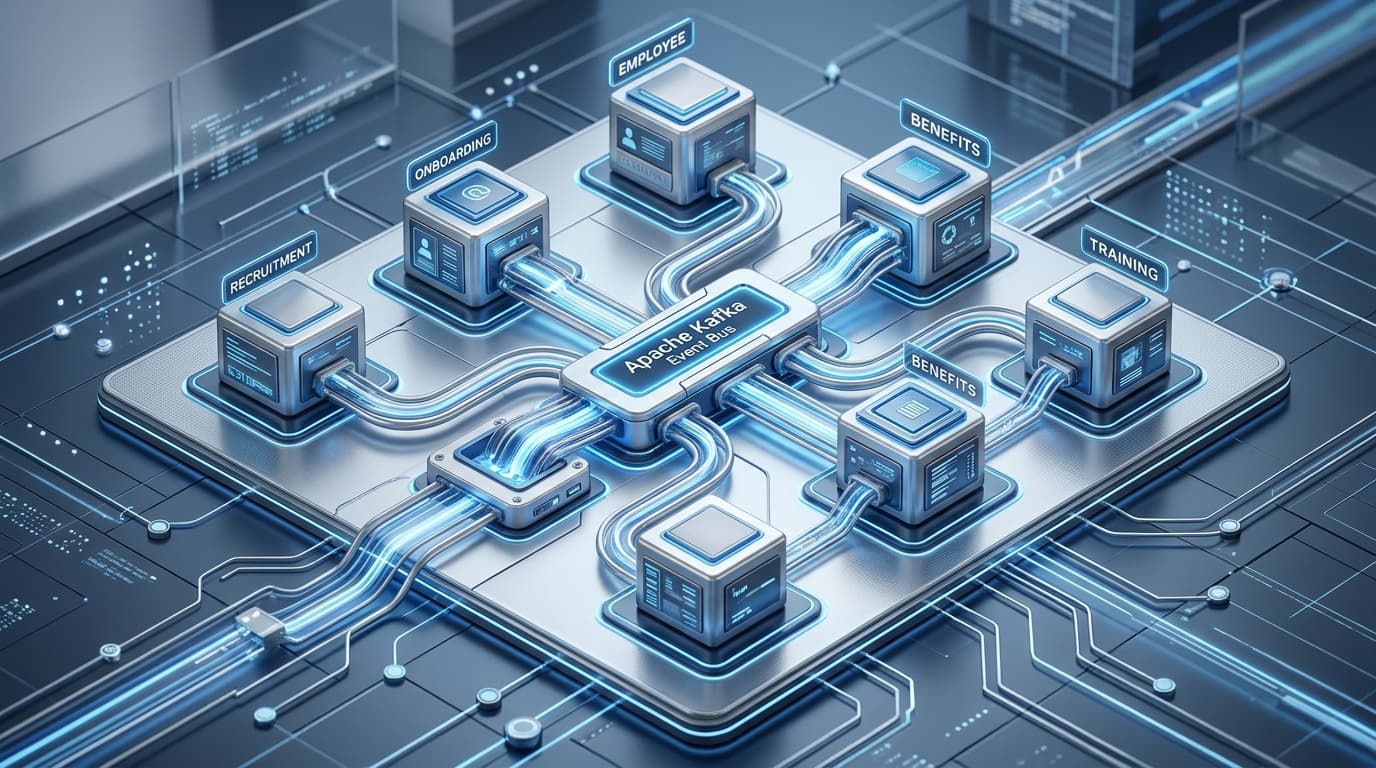
Large enterprise structures never have a single standard system. Established enterprise resource planning (ERP) solutions such as SAP, Logo and Netsis, core banking software, CRM tools and platforms such as Kafka for real-time data streams all run at the same time. A technology-independent ecosystem consolidates data from different sources under standard schemas without being bound to proprietary converters.
Architectural Design in Big Data and Analytics Ecosystems
When data volumes reach petabyte levels and real-time processing becomes necessary, traditional relational databases fall short. This is where modern big data platforms come into play. Open data lake (Lakehouse) architectures remove the boundaries between databases, allowing data to be both analysed and reported on a single platform.
Balancing Open-Source and Enterprise Software
Technology independence does not simply mean using open source. The right strategy is a rational mix of reliable open-source technologies that have become industry standards (Apache Spark, Trino, Kafka, etc.) and tools that provide enterprise security and support. In this way, the organisation benefits from the power of innovative communities while also securing enterprise SLA levels.
Self-Service Analytics and Speed of Decision-Making
It is not sustainable for central data teams to produce custom reports for every department. An independent data layer presents the data in the data warehouse through a standard semantic model, enabling business units to perform their own analyses. Reliable self-service analytics infrastructures bound by governance rules allow decision-makers to generate instant insights and reduce the operational load on the IT department by up to 40%.
Comparison: Locked-In Architectures vs. Technology-Independent Solutions
The table below details the operational and technical differences between data architectures dependent on a single vendor and open, technology-independent data models:
| Criterion | Vendor-Dependent Architecture | Technology-Independent Architecture |
|---|---|---|
| Data Portability | Difficult and costly; proprietary formats are used. | Easy; open file formats (Parquet, Iceberg, etc.) are used. |
| Cost Flexibility | Subject to the annual price increases and bundles set by the vendor. | Can be optimised through open standards and modular choices. |
| Regulatory Compliance | Limited to the provider's infrastructure geography. | Fully compliant in on-premise, hybrid and local cloud set-ups. |
| Integration Capability | Integrates only with the ecosystem tools the vendor permits. | Fully integrated through standard APIs, ODBC/JDBC and open protocols. |
| Pace of Innovation | Dependent on a single company's product development schedule. | Immediately open to every innovation in the global technology ecosystem. |
Roadmap and Practical Tips for a Successful Transition
Implementing a technology-independent data strategy does not mean replacing systems overnight. It requires a gradual, well-planned transformation process.
- Inventory and Dependency Analysis: Existing data flows, ERP systems, reporting tools and licence agreements should be listed.
- Decoupling the Data Layer: Data storage formats should be standardised (for example, by migrating to open table formats) and decoupled from the compute layer.
- Data Governance: Data quality, cataloguing and access permissions should be centralised on a single technology-independent governance platform.
- Integration of Analytics Tools: The BI tools used by departments (Power BI, Tableau, etc.) should connect directly to the core open data layer.
Challenges Encountered in Practice and Their Solutions
In practice, the greatest resistance during the transition stems from in-house teams being reluctant to give up the proprietary interfaces they have been used to for many years. To overcome this obstacle, while the underlying data architecture is made independent, the interfaces end users report from should be preserved as far as possible or moved to next-generation tools through a gentle training process. Another reality in the field is data security. When layers are decoupled, role-based access control (RBAC) and data masking processes need to be centralised.
Common Mistakes
- Putting Technology Before Strategy: Turning a particular popular tool into a goal in itself and ignoring the organisation's actual data volume and business needs.
- Leaving Governance for Later: Postponing data quality, MDM (Master Data Management) and metadata cataloguing while making the architecture independent; this quickly turns the architecture into an uncontrolled data swamp.
- Trying to Start Completely from Scratch (Big Bang Approach): Rather than abandoning the entire working infrastructure at once, progressing in a hybrid manner through a pilot data flow always carries less risk.
If you want to prepare your organisation's data architecture for the future, escape high licence costs and build a fully compliant ecosystem, let's work together on your project. Get in Touch.
Frequently asked questions
Does a technology-independent data architecture mean throwing away existing investments?
No. Rather than excluding your existing SAP, Logo, Netsis or installed data warehouse investments, a technology-independent approach enables these systems to communicate through open standards, extending the life of your investments and increasing their value.
What risks does vendor lock-in pose to organisations?
Vendor lock-in leads to unpredictable licence increases, being bound to the software's roadmap, the inability to integrate innovative tools and, in the event of an infrastructure migration, transformation costs running into millions of dollars.
What is the role of technology independence in KVKK and BDDK compliance?
Technology-independent solutions give the organisation complete freedom over where data is stored. This guarantees that data is kept within Turkey's borders, on fully compliant local servers or in secure private clouds.
Are open-source technologies secure at the enterprise level?
Open-source projects backed by the Linux Foundation or Apache and used in modern enterprise data architectures are audited and developed by the world's leading technology companies. With the right enterprise architecture design and authorisation layers, far more secure and transparent structures are achieved than with closed systems.
How long does a migration to a technology-independent data warehouse take?
Depending on the organisation's data volume and the number of integrated systems, a phased migration is usually completed in 3 to 9 months. To avoid disrupting business processes, the process is carried out through pilot phases run in parallel.
Image: Daniel Julio · Unsplash · Unsplash License